











Internal Quality Assurance Cell (IQAC) and Women’s Studies Centre of Thiagarajar College, Madurai – 09, jointly organized a Teaching and Non-Teaching Faculty Development Workshop on “Developing Critical Thinking Skills for Active Learning” on 09th January 2026, in alignment with Sustainable Development Goal – 4 (Quality Education). The programme aimed to strengthen the ability of participants to analyze situations, question assumptions, make informed decisions, and apply logical reasoning in academic and administrative contexts.
The programme commenced with a welcome address by Dr. R. Aruna, Director, Women’s Studies Centre, who warmly welcomed the dignitaries, resource person, and faculty participants. In her address, she emphasized the importance of critical thinking in problem-solving, decision-making, and reflective practice, and highlighted the need to encourage questioning, reasoning, and independent thinking among faculty members.
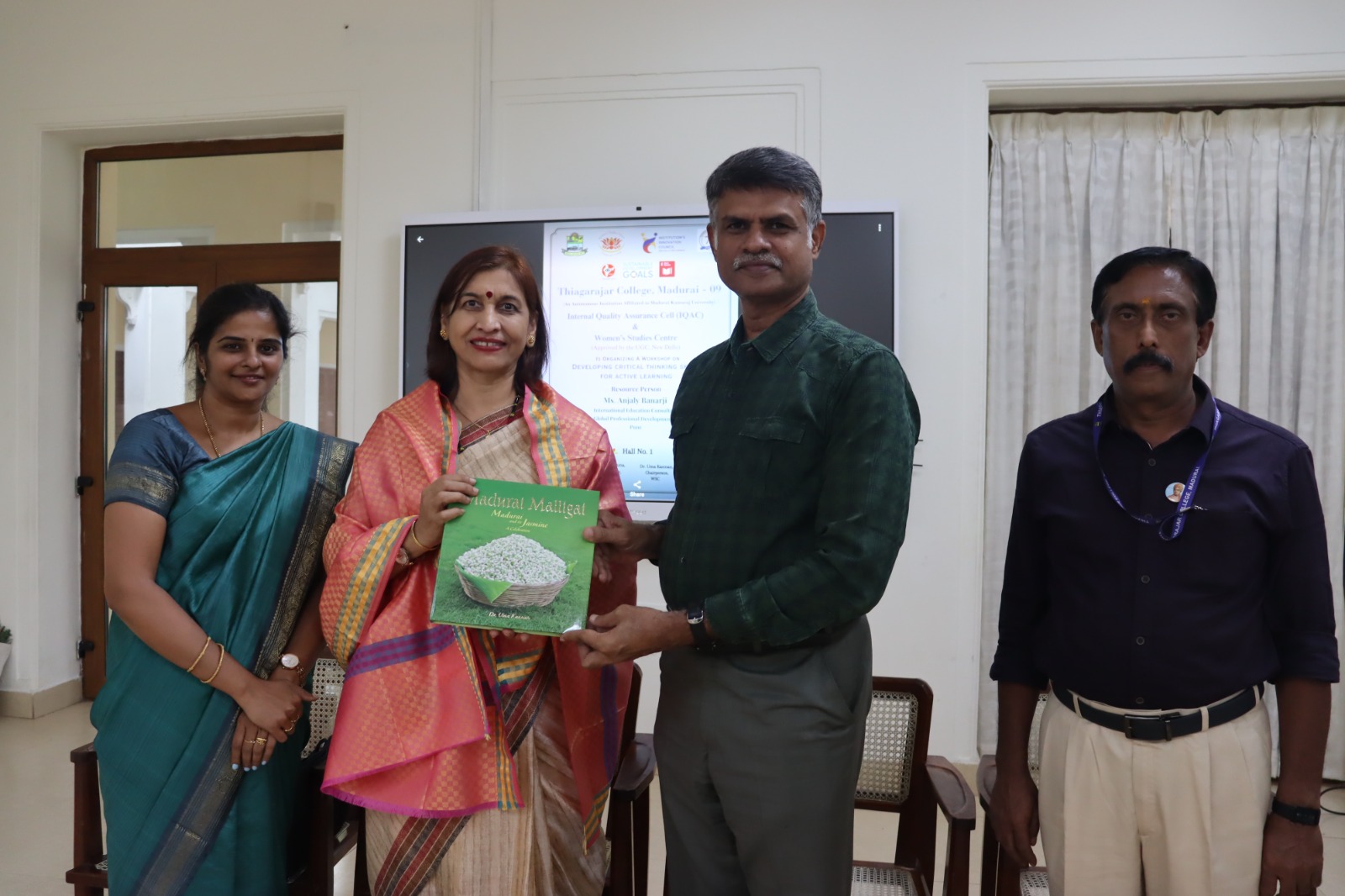
As a token of respect and gratitude, the resource person, Ms. Anjaly Banarji, was honored by the Principal, Dr. D. Pandiaraja, and Major Dr. N. Arun Nagendran, Director, IQAC. This was followed by the Presidential Address by the Principal, Dr. D. Pandiaraja, who stressed the significance of developing analytical, evaluative, and creative thinking skills among faculty members to respond effectively to the challenges of a rapidly changing VUCA world.
The workshop featured Ms. Anjaly Banarji, International Education Consultant, Global Professional Development IB, Pune, as the resource person. She initiated the session by explaining the concept of Critical Thinking, emphasizing the transition from accepting information passively to actively questioning, reasoning, and evaluating ideas.
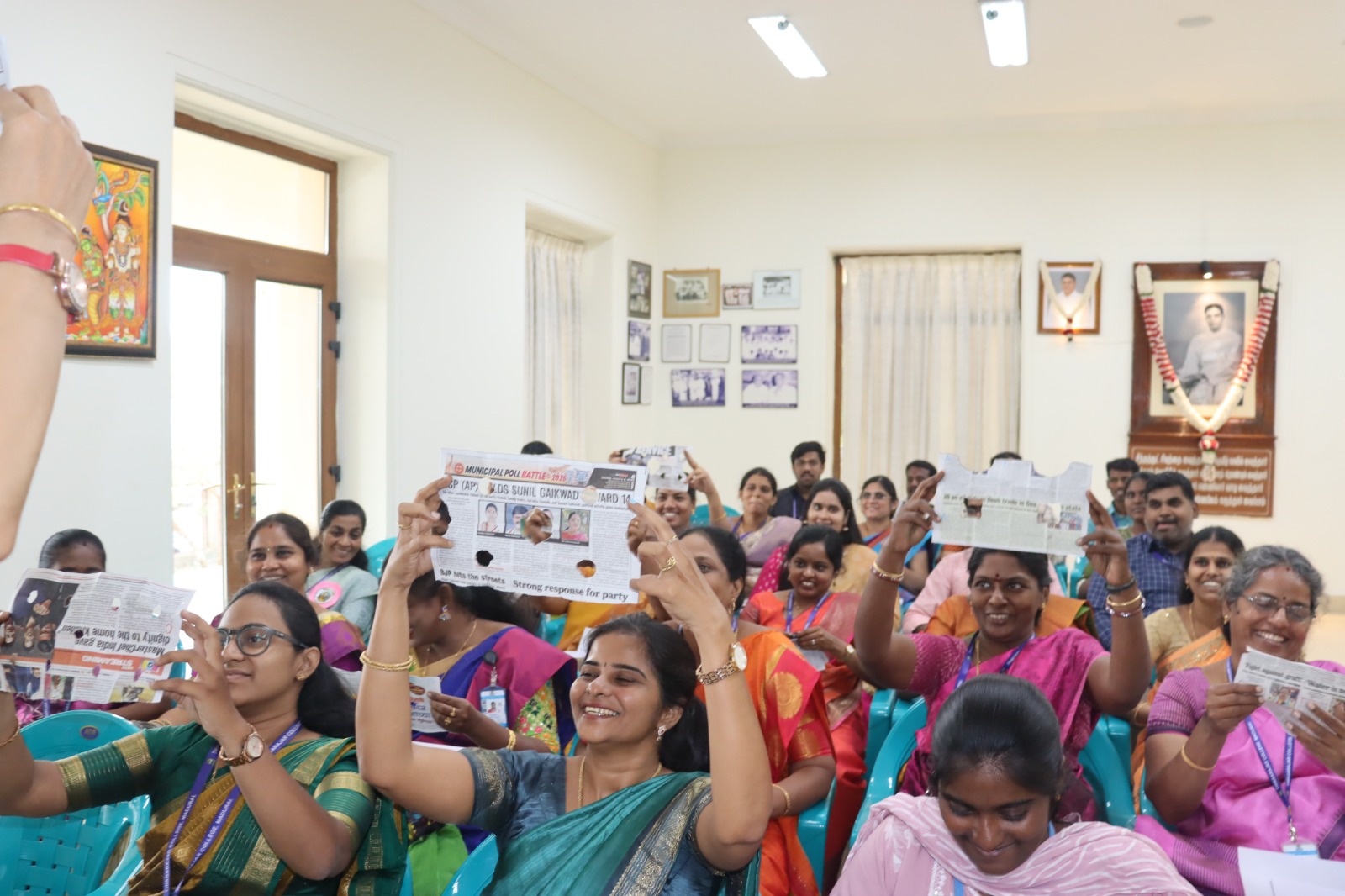
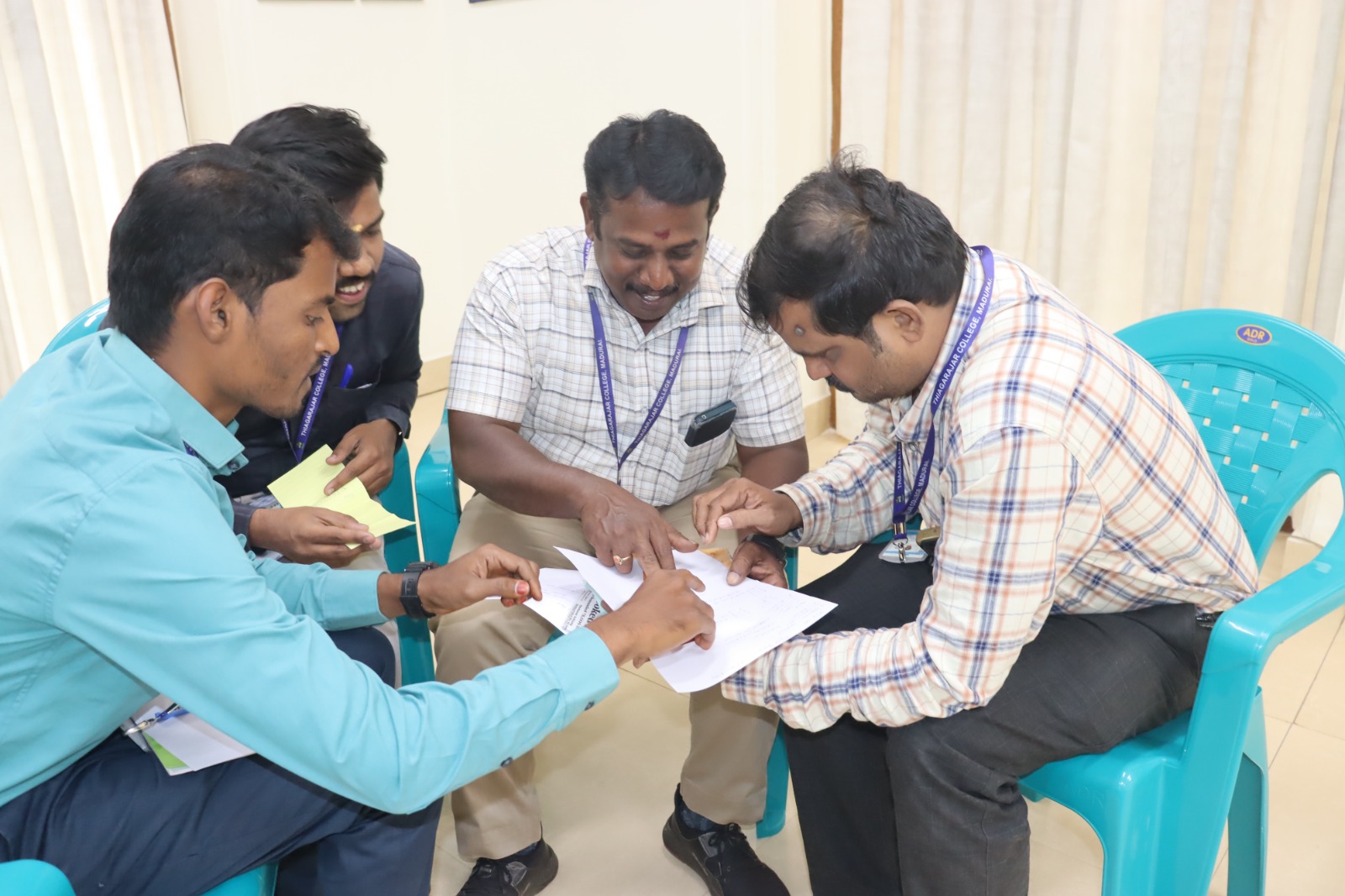
The session included a variety of interactive activities and demonstrations such as the Nine Dot Puzzle and engaging thinking-based activities, which demonstrated practical ways to stimulate observation, logical reasoning, and problem-solving skills. The resource person also discussed effective strategies such as the Socratic Method, Problem-Based Approaches, and Traffic Light Reflection (Muddiest Learning) to help faculty assess understanding, identify gaps in thinking, and encourage reflective responses.
The workshop was highly interactive and provided Teaching and Non-Teaching faculty participants with practical insights and hands-on strategies to enhance analytical thinking, reflective practice, and effective decision-making.
The programme concluded with a vote of thanks proposed by Ms. V. Veena Vidhya Sri, Assistant Professor, Department of Psychology, who expressed sincere gratitude to the resource person, dignitaries, organizers, and Teaching & Non-Teaching faculty participants for their active involvement and support, which contributed to the successful conduct of the programme.

